Stance control orthoses make it possible to walk dynamically and stand securely during the stance phase. The special Otto Bock orthosis systems lock the knee joint during stance phase and unlock it for the swing phase . The patient thereby achieves a dynamic, almost physiological gait pattern requiring less energy.
With their function , the E-MAG Active and Free Walk orthose relieve the back ,hips, and knee joint. In different ways , because of the individual differences of the orthosis system , they provide the patient with increased security, stability, and –above all greater mobility.
The E-MAG Active and Free Walk orthoses differ by their design and functionality. While the E-MAG Active functions electronically and independently from the ankle joint , the Free Walk system is controlled purely mechanically with the ankle joint correlating with the knee joint .
Typical patients who can be fitted with a Free Walk orthosis are patients who lost the control of their muscles caused by traumatic influence , but who have not suffered from other stronger lesions on the extremity ( e.g. condition after incomplete paraplegia
Gait Cycle with stance control knee joint system:
During the entire stance phase , the orthosis remain locked. The orthotic joint is then released between the terminal stance phase and pre-swing phase allowing the patient’s knee joint to move freely during the swing phase. This provides the patient a degree of mobility that is nearly comparable with the gait of a healthy person. Studies have shown that , in comparison with a locked orthosis , the E-MAG Active and Free Walk orthoses offer considerable advantages with regard to energy expenditure, walking speed and reduction of the strain on the contralateral side.
Clinical objectives of orthotics treatment
To relieve pain
To manage deformities
To prevent an excessive range of joint motion
To increase the range of motion
To compensate for abnormalities of segment , length or shape
To manage abnormal neuromuscular function( weakness or hyperactivity)
To protect tissue
To promote healing
To provide other effects( placebo , warmth )
Classification and Description of orthoses and orthotic component
The final element of existing body of ISO orthotic terminology standard is designed to complement ISO 8551 .
This in turn comprises three elements.
General description : A.F.O and so on
Function of orthoses ( prevent , reduce and so on)
Type of fabrication( custom or prefabrication)
Four categories of component are identified :
Interface components ( shells , pads ,straps ,foot orthosis )
Articulating components ( allow or control the motion)
Structural components( components which connect the interface and articulating components and include both uprights and shell)
Cosmetic components ( fillers , covers , and sleeves )
Writing the prescription
The main body of the prescription should include details of orthosis ,starting with the basic ISO acronyms using universal terminology.
The range of motion or limitation at each joint should be indicated clearly on the prescription
Any correction straps wedges should be included
If the physician assesses the patient independently and is uncertain of the best orthotic design ,the physician should send the patient to the orthotist for consultation and evaluation .the consultation request should include as much information as possible ,including medical diagnosis , prognosis , orthotic goals and request to evaluate for orthotic management and call to discuss the alternatives .Based on this discussion , a detailed prescription is written
Upper limb orthosis for the stroke and brain injured patient
Contracture prevention
a combination of peripheral nerve blocks and splinting techniques are commonly used to give temporary relief of spasticity. Splinting maintains muscle fiber length and diminishes muscle tone by decreasing sensory input.
Lidocaine blocks are helpful when done prior to cast application , because relieving the spasticity allows for easier limb positioning
Shoulder orthosis
Abduction pillow: a foam pillow is useful device for positioning the shoulder in slight abduction and neutral position
Elbow orthosis:
Dropout cast
Dynamic elbow orthosis :most commonly an extension force is needed in stroke and brain injured patients
Wrist and hand orthosis :
Volar wrist splint : this most commonly is indicated following surgical lengthening of spastic extrinsic finger flexor muscles .volar splint can be useful for maintaining the wrist in an extended position for hand function
Resting wrist- hand orthoses: this orthosis can immobilize the wrist alone , or it can include the thumb and fingers . As with all hand orthosis , controlling the undelying muscle tone before using splint is important .
Dynamic wrist orthoses: patient with a relatively flexible wrist flexion deformity can benefit from the use of a dynamic wrist extension orthosis . The range of motion of the wrist can be adjusted as the deformity improves.
Finger and thumb orthoses:
Static hand splint: can be used to maintain the position of the fingers
Dynamic hand splints:
Outrigger splint:uses rubber bands on slings place beneath the proximal phalanx of the thumb and fingers . The fingers are held in in an open position and the thumb abducted . The patient can more easily position the hand to grasp an object
Thumb spica cast/splint: is an excellent orthotic device for positioning the thumb . It is commonly used orthotic device for correcting a thumb -in -pulm contracture.
Split ring orthoses: very useful for positioning the proximal interphalangeal joint for function use of the hand.
Thumb abduction splint: to prevent or reposition a thumb that wants to rest in the palm. A lightweight splint that hold the thumb metacarpal in an abducted and slightly opposed position can be used to improve thumb function and pinch
Orthosis for the arthritic hand and wrist
Wrist orthosis: the most commonly used WO is the wrist cockup splint. It is a simple static orthosis that immobilizes the wrist and allow full MP flexion and thumb opposition . this simple WO positions the wrist in approximately 10 to 30 degrees of extension to allow maximum function
The resting hand orthosis provides static positioning to the wrist and digits. It is used in acute rheumatoid arthritis to decrease pain and to align the joints in a normal anatomic position to avoid the zigzag position .the normal resting position of the hand is typically 10 to 20 degrees of wrist extension , 20 to 30 degrees of MP flexion , 0 to 20 degrees of PIP flexion , DIP in slight flexion , the thumb CMC in slight extension and abduction , and the thumb MP and IP in slight flexion .
A volar or dorsal resting splint is commonly prescribed for patients with rheumatoid arthritis . Resting splints can reduce stress on joint capsules , synovial lining , and periarticular structures , thereby decreasing pain .
Thumb spica orthosis: It provedes support to the thumb CMC and MP joints to decrease pain and provide stability . During fabrication , the thumb should be positioned in abduction to be used as an oppositional post for the fingers .
Preoperatively a static orthosis may be fabricated to prevent swan-neck or boutonniere deformities from becoming fixed and improve hand function. A commonly used orthosis for this situation is a figure-of-eight ring orthosis or tripoint finger splint . The orthosis applies pressure at the three point on the finger , providing a correcting force opposite to that of the deformity.
Functional bracing of selected upper limb fractures
Functional bracing of diaphyseal humeral fractures: the most widely accepted treatment of the majority of humeral fractures is functional bracing.
Indications and contraindications: the majority of closed humeral diaphyseal fractures can be treated with functional bracing . Patient who can not follow instructions or for other reasons can not perform early passive exercise routines , which are crucial for a good outcome , should not be braced .
The level of the disphyseal fracture is not important. The brace does not need to cover the fracture site itself because its effectiveness is dependent on compression of the surrounding soft tissues. However , fracture of the surgical or anatomical neck of the humerus and those with distal intraarticular involvement require other therapeutic approaches.
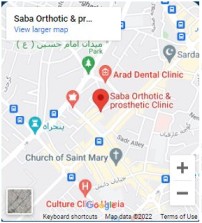
آدرس کلینیک ارتوپدی فنی صبا
آدرس : ارومیه-خیابان خیام شمالی-کوچه ی خانباباخان(کوی اول)-ساختمان پزشکان میلاد نور-کلینیک ارتوپدی صبا
آخرین مطالب
ارتباط با ما
تلفن کلینیک : 04-22-24-32
تلفن همراه : 9808-087-0912
پست الکتریکی(ایمیل) : meh90mor@gmail.com
به ما اعتماد کنید !

گواهینامه از ottobock

گواهینامه از alber