Solid Ankle-Cushion Heel Foot
Compared with the single-axis design, the SACH foot represented a lighter , more durable, low cost , and maintenance-free alternative. It quickly become very popular worldwide and has proven to be a very versatile , albeit basic, foot design . Despite its mechanical simplicity the SACH foot results in very smooth motion clinically. It is popular for infants and toddlers and is often used in preparatory limbs and for patients whose physical condition precludes ambulating more than few steps at a time.
Lower Limb Prosthesis
Multiaxial Ankle-foot:
Multiaxial feet contain a mechanism that offers a limited range of coronal plane inversion and eversion as well as sagittal plane plantar flexion and dorsiflexion . The classic indication for use of a multiaxial foot is to accommodate uneven surfaces encountered in the amputee’s vocational or avocational activities. The compliance of this device is also believed to contribute to socket comfort by absorbing some of the impact of walking.
Lower Limb Prosthesis
Flexible-keel Foot:
For centuries, conventional wisdom held that a prosthetic foot must have a rigid forefoot to provide sufficient stability for amputee ambulation. In the early 1980s, an innovative design developed by an American prosthetist .
The keel is made from solid rubber and extends beyond the metatarsal region into the toe area of the foot . As a result, the forefoot is very flexible and can accommodate irregularities by bending into pronation and supination . The flexible keel also facilitates rollover, and amputee find this makes walking easier.
Flexible-keel feet are well accepted by many amputees, and they are sometimes used in preparatory limbs because of the smooth rollover provided .
Lower Limb Prosthesis
Dynamic-Response Foot:
Dynamic-Response feet are characterized by a spring-like keel that deflects under load , stores potential energy, and releases it in the latter part of stance phase.
Studies have demonstrated that dynamic-response feet vary in their ability to store and release energy and that those made from carbon fiber composites are generally more efficient than designs using lower cost plastics.
Lower Limb Prosthesis
Dynamic-Response Foot:
Although many investigators have shown that dynamic-response feet are the most energy-efficient option for sports and recreational activities, few studies have demonstrated any energy advantage at normal walking speeds on level surfaces.
Lower Limb Prosthesis
Prosthetic knee mechanisms:
Prosthetic knees can be grouped into five functional classes based on their biomechanical performance. This initial classification suggest primary indication and specific limitations and provides a convenient guideline for prescription. Once the appropriate functional class has been determined, the prosthetist must then choose the specific product that he or she believes will offer the greatest durability and functional performance with the lowest cost and weight penalty.
Lower Limb Prosthesis
Single-Axis Knee:
Because of its mechanical simplicity , the single-axis knee remains the least expensive and most maintenance-free option . It is sometimes recommended for amputees who live in remote areas and can not arrange regular prosthetic follow-up.
Unfortunately, the basic single-axis knee has two major biomechanical deficiencies. First the knee has no inherent stability, and therefore must be carefully controlled by the amputee with every step to prevent collapse of the prosthesis. Equally important, with a free-swinging knee, the lower leg is essentially a pendulum with a rate of swing limited by its length. As a consequence, the amputee is forced to walk at a constant, slow speed.
Lower Limb Prosthesis
Stance-control knee:
The stance-control knee is the most commonly prescribed prosthetic knee design worldwide. This mechanism typically have a weight-activated friction brake. As the amputee applies weight to the prosthesis in early stance, the brake is engaged and the resulting friction holds the knee securely.
To flex knee, the amputee must shift weight onto the opposite leg. Once the prosthesis is fully unloaded, the brake mechanism is released so the lower leg can then swing freely. Accordingly, for bilateral amputees, the stance-control knee is best used on only one side, if at all.
Lower Limb Prosthesis
Polycentric Knee:
Polycentric knees can be identified by the multiple articulation they contain, with four axis points being the most common configuration . Five , six-, and seven-bar designs are also now commercially available. Polycentric knees also work very well bilaterally, providing stability without preventing voluntary knee flexion under partial weight bearing.
In recent years , complex polycentric knees featuring five-, six-, or seven-bar linkage have become available. Most offer more stance phase functions than four-bar designs, such as a geometric lock that automatically engages and disengages during ambulation . Some provide a limited range of controlled knee flexion during the loading response phase of gait, simulating this shock-absorbing motion of the biologic knee.
Lower Limb Prosthesis
Manual Lock Knee:
Manual lock knees provide maximum stability by locking the knee in full extension throughout the gait cycle. Because swing phase knee flexion is eliminated, the prosthesis is functionally too long; therefore, the amputee must hip-hike, vault, circumduct, or abduct the prosthesis to clear the floor. These necessary compensation not only result in an abnormal gait but are also believed to increase the energy cost of ambulation. It appears that a locked knee does not provide a more energy-efficient gait than a free swinging knee, but it may permit feeble elderly patients to walk more rapidly and therefore be preferred for this population.
Lower Limb Prosthesis
Fluid-Controlled Knee:
The term fluid-controlled knee refers to a prosthetic knee that incorporates a pneumatic or hydraulic unit to control knee motion. Research has shown that fluid-controled knees provide a smoother, more normal swing-phase movement and automatically compensate for moderate changes in the amputee’s cadence.
Lower Limb Prosthesis
The primary limitation to pneumatic knees is that they may not provide sufficient resistance for very vigorous activities because gases such as air are compressible. In clinical experience ,however, they are well accepted by the amputee and provide good swing-phase control for many people.
Lower Limb Prosthesis
Hydraulic knees, in contrast, use an incompressible liquid to control knee motion. For this reason, they can provide as much swing phase resistance as necessary. Because only a small volume of liquid is required for swing-phase control , some hydraulic knees are considerably smaller and lighter than pneumatic models.
Lower Limb Prosthesis
Hybrid knees:
In an effort to offer the amputee a more versatile knee component , designers have created knees that combine the features of one or more of the generic functional groups . One of the most clinically popular combinations uses a polycentric knee with its biomechanical advantages and adds a hydraulic or pneumatic fluid-controlled unit to provide variable cadence swing-phase control.
Lower Limb Prosthesis
Microprocessor control:
The recent addition of microprocessor control to automatically adjust the resistance of fluid-controlled knees while the amputee is walking has proved its clinical value. Scientific studies suggest that microprocessor control makes the gait kinematics more normal and may result in a more energy-efficient gait. Amputee acceptance of this technology has been very encouraging.
Lower Limb Prosthesis
Microprocessor control:
The use of microprocessor control in lower limb components is expected to increase steadily in future years, enabling the amputee to engage in a greater range of normal activities of daily living. In addition to providing the ability to adjust the stance ability and swing-phase control of the prosthesis while the person is walking , microprocessor control can provide specialized resistance that facilitate work tasks such as standing during surgery or hairdressing , and recreational activities such as a bent-knee stance for golfing or skiing.
Lower Limb Prosthesis
Carbon fiber foot:
Triton:
A high performance polymer base spring connects the forefoot and heel made of flexible carbon fiber material to form an interactive system. This allows for an especially smooth rollover.
The split forefoot area is used for adapting to the surface thus guaranteeing that the movements are controlled. This provides secure hold when walking on uneven surface or at rapid changes of direction such as during sports.
The Triton is suited for patients who wish to have a dynamic carbon fiber prosthetic foot which would be suitable for every day life and leisure sports.
Lower Limb Prosthesis
Triton Vertical Shock:
Triton vertical shock broadens the excellent functionality of the triton carbon fiber foot by an increased vertical shock absorption and torsion capability.
The innovative design of the triton carbon fiber foot always a wide range of activities from daily life to leisure sports. The additional functions of triton vertical shock allow the user improved adaptation to uneven terrain.
Vertical and torsion forces, which occur e.g. while doing sports activities are reduced effectively. The residual limb of the user is noticeably relieved.
Advanced orthosis
Stance control orthoses make it possible to walk dynamically and stand securely during the stance phase. The special Otto Bock orthosis systems lock the knee joint during stance phase and unlock it for the swing phase . The patient thereby achieves a dynamic, almost physiological gait pattern requiring less energy.
Advanced orthosis
With their function , the E-MAG Active and Free Walk orthose relieve the back ,hips, and knee joint. In different ways , because of the individual differences of the orthosis system , they provide the patient with increased security, stability, and –above all greater mobility.
Advanced orthosis
The E-MAG Active and Free Walk orthoses differ by their design and functionality. While the E-MAG Active functions electronically and independently from the ankle joint , the Free Walk system is controlled purely mechanically with the ankle joint correlating with the knee joint .
Typical patients who can be fitted with a Free Walk orthosis are patients who lost the control of their muscles caused by traumatic influence , but who have not suffered from other stronger lesions on the extremity ( e.g. condition after incomplete paraplegia)
Advanced orthosis
Gait Cycle with stance control knee joint system:
During the entire stance phase , the orthosis remain locked. The orthotic joint is then released between the terminal stance phase and pre-swing phase allowing the patient’s knee joint to move freely during the swing phase. This provides the patient a degree of mobility that is nearly comparable with the gait of a healthy person. Studies have shown that , in comparison with a locked orthosis , the E-MAG Active and Free Walk orthoses offer considerable advantages with regard to energy expenditure, walking speed and reduction of the strain on the contralateral side.
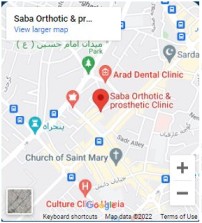
آدرس کلینیک ارتوپدی فنی صبا
آدرس : ارومیه-خیابان خیام شمالی-کوچه ی خانباباخان(کوی اول)-ساختمان پزشکان میلاد نور-کلینیک ارتوپدی صبا
آخرین مطالب
ارتباط با ما
تلفن کلینیک : 04-22-24-32
تلفن همراه : 9808-087-0912
پست الکتریکی(ایمیل) : meh90mor@gmail.com
به ما اعتماد کنید !

گواهینامه از ottobock

گواهینامه از alber