Semirigid spinal orthoses ( corsets )
Corsets can be effective in managing pain caused by muscle strain because they reduce the activity of the spinal and abdominal musculatures. However , when corsets are used long term , musculature can atrophy and increase the chance of reinjury . Therefore ,corsets should be used only as long as necessary .
Principles and component of spinal orthoses
Sacroilic corsets are meant to provide assistance to the pelvis only. These garments encompass the pelvis with endpoints inferior to the waist and superior to the pubis. These corsets are used to effect a slight increase in abdominal circumferential pressure for mild compression.
Principles and component of spinal orthoses
Lumbosacral corsets encompass the pelvis and abdomen . In exerting circumferential pressure , they increase intracavitary pressure in the abdomen and transmit a semirigid three point pressure system on the lumbar spine
Thoracolumbosacral corsets increase the leverage of the corsets system . Shoulder straps provide posteriorly directed force meant to extend the thoracic spine. TLSO corsets serve mostly as a kinesthetic reminder to control motion in the thoracic spine ; they do not provide sufficient rigidity to prevent such motion.
Principles and component of spinal orthoses
Rigid LSO : this orthosis includes a component of coronal control by the addition of lateral bars. The eponym for this orthosis , LSO knight style ,refers to knight , consists of a thoracic band , paraspinal bars, and lateral bars. In addition to the three point pressure systems described for restriction of sagittal plane motion , this orthosis adds three point pressure in the coronal plane to limit lateral flexion
Principles and component of spinal orthoses
LSO : Extension –coronal control( williams flexion):
This dynamic orthosis consists of a thoracic band , pelvic band , lateral bars and oblique bars . As the device is worn , an inelastic pelvic strap is tightened so that free flexion can occur , but extension is stopped. Williams originally described this orthosis in 1937 for treatment of spondylolisthesis , and the device still may be prescribed for this pathology.
Principles and component of spinal orthoses
TLSO : flexion control (hyperextension orthosis): this orthosis is commercially available in various styles and sizes from a number of manufactures . One style consists of an aluminum frame with pads at the pubis , sternum , and lateral midline of the trunk . This TLSO : Jewett style is named for Jewett. The system applies two posteriorly directed forces , one at the sternal pad and one at the pubic pad , and an equal but opposite anteriorly directed force from the lumbar pad . When worn , the orthosis restricts flexion of the spine.
Principles and component of spinal orthoses
TLSO : Sagittal control:
The eponym TLSO : Taylor style is named for Taylor the New York orthopedist who described it in 1863. the orthosis consists of a pelvic band , paraspinal bars , an intrascapular band , and axillary straps . The axillary straps provide one of the posteriorly directed forces to reduce the range of flexion
Principles and component of spinal orthoses
Cervical orthoses:
Cervical orthoses are indicated for two primary reasons: pain management and motion control of the cervical spine.
Prefabricated cervical orthoses can be generally categorized as soft , semirigid, and hard . The soft cervical orthosis , also known as a foam collar , functions primarily as a kinesthetic reminder for the individual to reduce excessive motion . Semirigid and hard cervical collars as a group , reduce cervical motion in the saggital plane more than foam collars do but still provide little control of lateral flexion and rotation.
Two-poster and four-poster designs of cervical orthosis offer more rigid immobilization of the cervical spine because of the occipital pad ,mandibular pad ,and sternal and thoracic pads.
Principles and component of spinal orthoses
CTO : cervicothoracic
A commercially available cervicothoracic orthosis that is frequently used for motion control is the mandibular immobilizer. This orthosis consists of a sternal plate with shoulder components , mandibular pad and bar , and occipital pad and bars. It provides good motion control of flexion , especially in the lower cervical segments, but it actually allows some extension motion because of a swivel type occipital pad.
Principles and component of spinal orthoses
The Halo cervicothoracic orthosis provides triplanar motion control in the cervical spine. This orthosis provides the best endpoint control of the cervical spine ; however , its lack of total contact allows the occurance of a phenomenon called intersegmental snaking.
A total contact cervicothoracic orthosis such as a Minerva or Miami JTO might provide better intersegmental immobilization of the cervical spine. Despite the intersegmental motion , however , halo fixation usually is best for fracture healing
Orthoses for spinal pain
Mechanisms of action of lumbar orthoses:
Several potential mechanisms of action for the pain-relieving ability of spinal orthoses have been proposed in the literature.
The mechanical effectiveness of orthoses could result from intersegmental motion restriction , gross motion restriction , or decrease load on the spinal column. Other rationales include increased abdominal pressure, reduced muscle fatigue , increased postural awareness or proprioception , heat , and placebo.
Orthoses for spinal pain
Motion restriction:
The effect most often expected from a brace is restriction of motion , however, available literature investigating different orthoses and their ability to restrict motion has reported inconsistent result . Excessive trunk motion , especially axial rotation , often is assumed to be the cause of back injury. Orthoses are prescribed to prevent this excessive motion and thus reduce low-back pain.
Orthoses for spinal pain
Conclusion :
Evidence on the effectiveness of orthoses in the treatment of low-back pain is conflicting. Some devices likely are more effective than others in reducing pain ; however a variety of factors , including interindividual differences , appear to influence the pain-relieving characteristic of the devices
Orthoses for spinal deformities
The use of orthoses in the treatment of spinal deformity is controversial. Most often , they are used to prevent further progression or to effect mild correction of an exiting deformity in a growing child or adolescent. Increasing evidence in the literature supports the value of orthotic treatment for various forms of spinal deformity. It is therefore incumbent upon those who prescribe and provide orthoses for spinal deformity to fully understand the complexities of this form of patient care.
Orthoses for spinal deformities
Scoliosis:
Current research:
The Prevalence and Natural History Committee of the Scoliosis Research Society conducted a meta-analysis on more than 1’900 patients from 20 studies. They conclude that bracing ( with TLSOs or the Milwaukee orthosis ) is indeed effective in controlling curve progression in idiopathic scoliosis and that full-time (23 hours per day) bracing is more effective than part-time ( 8 to 16 hours per day) bracing. The latter finding is further supported by more recent studies.
It appears that the highest success rate from a bracing program can be expected when a patient is instructed to wear the orthosis for 20 or more hours per day.
Orthoses for spinal deformities
Scoliosis
Orthotic management and best practice:
To be considered effective , orthotic treatment must prevent curve progression in those who are most at risk( curves of 25 to 45 degrees in Risser 0 to 1 patients), result in an acceptable cosmetic appearance at the end of treatment and reduce the need for surgery. In other words, use of an orthosis must improve the patient’s outcome when compared with the expected natural history. Low-profile TLSOs are the most commonly used orthoses at present ,but their use is generally restricted to patients whose curve apex is at T7 or below. Fortunately , this is the case in most curve patterns in adolescents with idiopathic scoliosis.
Numerous reports in the literature attest to the effectiveness of orthotic treatment of adolescent idiopathic scoliosis.
Orthoses for spinal deformities
Scoliosis
Numerous orthosis are available today , many of which are named after their place of origin. Examples include the Milwaukee brace , the Boston brace , the Wilmington brace, the Miami TLSO , the Rosenberger orthosis, the Charlestone brace and others.
Orthoses for spinal deformities
Milwaukee brace, introduced by Blount , schmidt, and Bidwell in 1946 , was the first design in the 20th century to be fully described in the medical literature. While the designs used today may differ in varying degree to that which was originally described , the basic principles of how corrective forces are applied to the spine remain essentially the same.
Orthoses for spinal deformities
The Milwaukee brace has been shown to be effective in controlling curve progression in idiopathic scoliosis . The authors found that patient with curves between 20 to 39 degrees who used the Milwaukee brace were less likely to have curve progression exceeding 5 degrees when compared with a similar patient population that received no treatment .
Orthoses for spinal deformities
The Boston brace was introduced in 1971 by Hall and Miller. Its design consist of a prefabricated , symmetric thoracolumbar –pelvic module that is customized to the patient based on shape and radiographic parameters needing to be addressed . It is based on principle of applying corrective forces at the convexity of the curve while providing relief opposite these area of pressure through windows cut in the plastic and other methods
The Boston brace has been shown to be effective in controlling curve progression as the Milwaukee brace and is one of the most common orthoses used today.
Orthoses for spinal deformities
The wilmington brace was described in 1980 .it is custom-made from a positive mold of a patient’s torso in which the scoliosis is maximally corrected . The indications for the Wilmington brace are the same as those for the Boston brace. It also has the same limitations ( i.e., it is not effective in curves with an apex T7-8). This orthosis is a one-piece, anterior-opening orthosis with anterior trim line from symphysis pubis to sternal notch and bilateral heights to axilla.
Orthoses for spinal deformities
The Charleston brace was developed based on concept the part-time use may be effective . Worn at night for only 8 to 10 hours , this orthosis is designed to take advantage of the recumbent position to shift the convexity of the curve as much as possible toward the midline . Despite several studies that have reported that the Charleston brace is as effective as the Milwaukee and Boston brace .
Orthoses for spinal deformities
Scheurmann’s kyphosis:
In general , the use of orthoses in the treatment of Scheurmann’s disease is less common but more challenging compared to orthotic management of idiopathic scoliosis. Both the Milwaukee brace and the lower-profile TLSO apply 3-point corrective forces at and around the apex of the kyphotic segment. In theory , the more traditional , circumferential neck ring is used for higher thoracic curves( e.g., apex T6 and above) while the lower profile neck ring designed are more suited to midthoracic curves( e.g., apices of T7 orT8).
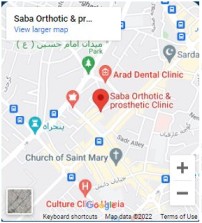
آدرس کلینیک ارتوپدی فنی صبا
آدرس : ارومیه-خیابان خیام شمالی-کوچه ی خانباباخان(کوی اول)-ساختمان پزشکان میلاد نور-کلینیک ارتوپدی صبا
آخرین مطالب
ارتباط با ما
تلفن کلینیک : 04-22-24-32
تلفن همراه : 9808-087-0912
پست الکتریکی(ایمیل) : meh90mor@gmail.com
به ما اعتماد کنید !

گواهینامه از ottobock

گواهینامه از alber